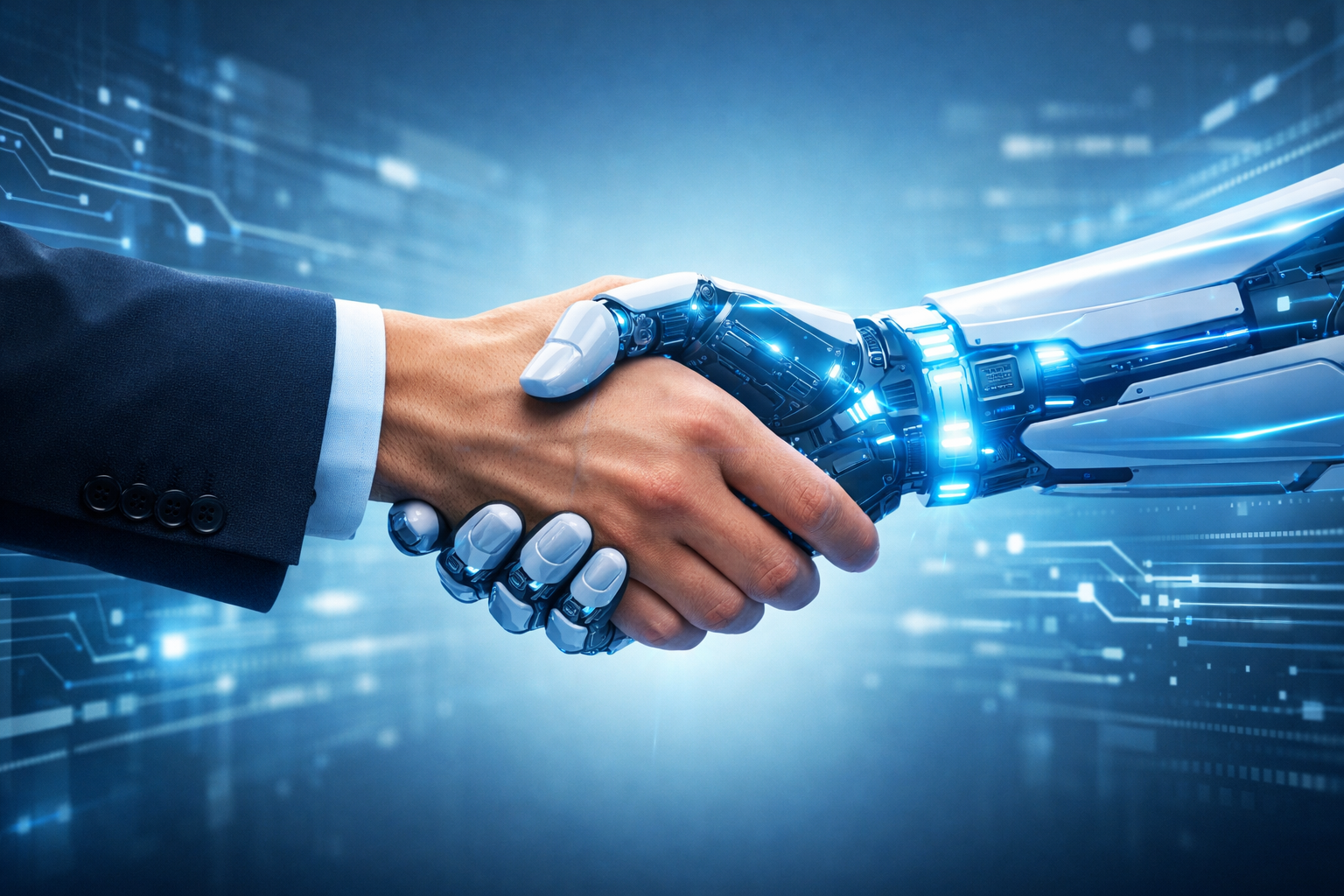
Artificial Intelligence (AI) is now a part of our daily lives. From Google Maps and YouTube recommendations to face unlock and spam filters, AI-based products are everywhere. But one important question remains:
When do users trust AI-based products?
Trust plays a critical role in the success of any AI system. If users do not trust an AI product, they will not use it—no matter how advanced it is. In this article, we will explore the key factors that help users trust AI-based products and what companies can do to build that trust.
What Does It Mean to Trust AI-Based Products?
Trust in AI means users feel confident that an AI system:
- Works correctly
- Gives accurate results
- Is safe to use
- Protects their personal data
- Makes fair and unbiased decisions
Users do not just ask whether AI is smart. They ask whether it is reliable, transparent, and ethical.
1. Transparency and Explainability in AI
Users trust AI-based products more when they understand how the AI makes decisions.
If an AI system works like a “black box” and does not explain its results, users become suspicious.
Example:
If a bank’s AI rejects a loan, it should explain:
Your application was rejected due to low credit score and insufficient income.
Transparent AI builds user confidence and credibility.
2. Accuracy and Reliability
Accuracy is one of the most important reasons users trust AI-based products.
Users start trusting AI when:
- The results are mostly correct
- The system behaves consistently
- Errors are rare and not random
Real-Life Examples:
- Google Maps for navigation
- Spam filters for emails
- Autocorrect and grammar tools
The more reliable the AI, the stronger the trust.
3. Consistent Performance Over Time
Trust is not built in one day. It grows with experience.
Users trust AI products more when:
- They get good results repeatedly
- The system improves over time
- Past usage has been positive
Example:
YouTube and Netflix recommendations get better the more you use them. This consistent improvement increases trust.
4. Data Privacy and Security
One of the biggest concerns about AI is data misuse.
Users trust AI-based products when:
- Their data is protected
- The privacy policy is clear
- They can control app permissions
- They can delete their data
If privacy is not respected, trust is instantly broken.
5. Fairness and Bias-Free AI
AI systems learn from data. If the data is biased, the AI will also become biased.
Users trust AI more when:
- Everyone is treated fairly
- The system does not discriminate
- The company actively works to remove bias
Example:
An AI hiring tool should select candidates based on skills, not background, gender, or religion.
6. Human Control Over AI Systems
People do not want AI to have complete control, especially in important areas like healthcare, education, or finance.
Users trust AI-based products more when:
- Humans can review decisions
- There is a manual override option
- AI works as an assistant, not a replacement
Example:
Doctors use AI to support diagnosis, not to replace doctors.
7. Trust in the Company Behind the AI
Users also trust AI based on who built it.
People trust AI more when:
- The company has a good reputation
- The brand is known for ethics and quality
- The company is transparent about its technology
A trusted brand makes its AI products more acceptable.
Why Do Users Distrust AI-Based Products?
Users lose trust when:
- AI makes frequent mistakes
- Decisions are unexplained
- The system behaves unpredictably
- Privacy is violated
- Bias or unfairness is visible
Once trust is lost, it is very difficult to regain.
Real-World Examples of Trusted AI-Based Products
Some AI tools people already trust:
- Google Maps – navigation
- YouTube & Netflix – recommendations
- Email spam filters – security
- Face unlock – smartphone authentication
They are trusted because they are useful, accurate, and consistent.
The Future of Trust in AI
In the coming years, successful AI products will focus more on:
- Ethical AI
- Transparent AI
- Secure AI
- Human-centered AI
Companies that design AI for people, not just profit, will gain long-term trust.
Conclusion: When Do Users Trust AI-Based Products?
Users trust AI-based products when they are:
- Transparent
- Accurate
- Consistent
- Secure
- Fair
- And controlled by humans
Trust in AI is not built by technology alone. It is built by experience, responsibility, and ethics.
Frequently Asked Questions (FAQs)
Do people trust AI completely?
No. Most people prefer AI with human supervision, especially for important decisions.
What is the biggest factor in trusting AI?
Reliability and transparency are the most important factors.
Can AI ever be 100% trusted?
AI can be highly trusted, but human oversight will always be necessary.
Leave a Reply