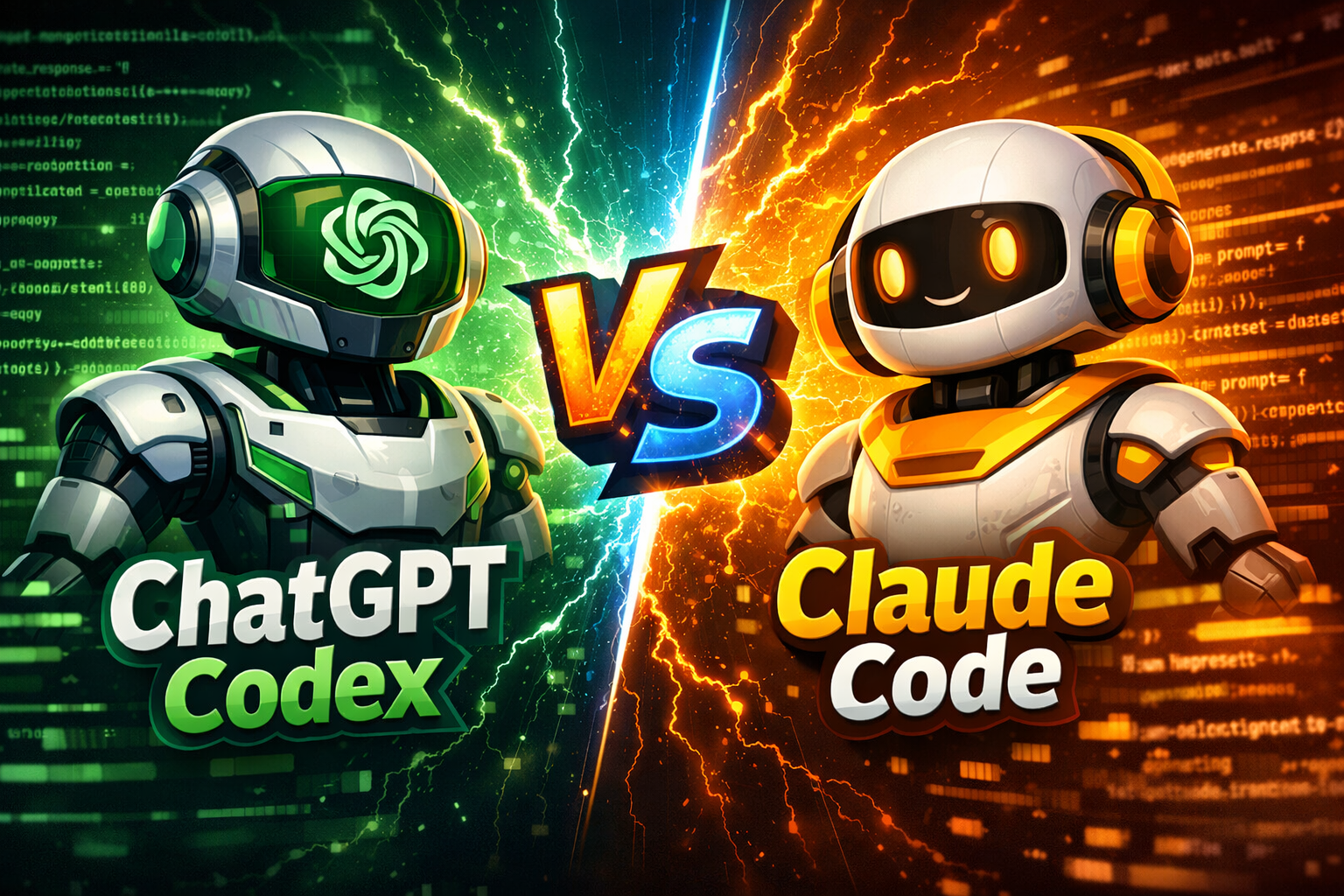
The landscape of AI-powered coding tools has evolved rapidly, giving developers powerful assistants to help with everything from writing boilerplate code to debugging complex systems. Two notable players in this space are ChatGPT Codex and Claude Code. While they share similar goals, they take different approaches to helping developers code more efficiently. Let’s dive into what sets them apart and which might be the better fit for your workflow.
What is ChatGPT Codex?
ChatGPT Codex is OpenAI’s AI model specifically trained on code. It powers GitHub Copilot and can be accessed through the OpenAI API. Codex excels at understanding natural language prompts and translating them into functional code across dozens of programming languages. It’s designed to act as an autocomplete tool that can generate entire functions, suggest code completions, and even explain what existing code does.
Key Features:
- Real-time code suggestions as you type
- Support for a wide range of programming languages
- Integration with popular IDEs through GitHub Copilot
- Ability to generate code from natural language descriptions
- Code translation between different languages
What is Claude Code?
Claude Code is Anthropic’s command-line tool that brings Claude’s coding capabilities directly to your terminal. Rather than being just an autocomplete assistant, Claude Code is designed as an agentic coding tool that can take on more complex, multi-step coding tasks. You can delegate entire features or debugging sessions to Claude, and it will work through the problem systematically.
Key Features:
- Terminal-based interface for direct interaction
- Agentic approach to handling complex, multi-step tasks
- Ability to read, edit, and create multiple files
- Strong reasoning capabilities for debugging and refactoring
- Context-aware suggestions based on your entire codebase
Head-to-Head Comparison
Integration and Workflow
ChatGPT Codex integrates seamlessly into your IDE through tools like GitHub Copilot. It works in the background, offering suggestions as you type. This inline approach feels natural and doesn’t disrupt your flow.
Claude Code operates from the command line, which means you interact with it more deliberately. You might ask it to implement a feature, fix a bug, or refactor a module, and it will work through the task step by step. This is ideal for when you want to delegate a task rather than just get quick suggestions.
Code Generation Capabilities
Both tools are excellent at generating code from natural language, but they shine in different scenarios:
ChatGPT Codex is unbeatable for rapid code completion and getting past boilerplate. If you know what you want to write and just need help typing it out faster, Codex’s autocomplete-style suggestions are incredibly helpful.
Claude Code excels when you need to think through a problem. Its agentic nature means it can plan out an implementation, consider edge cases, and make architectural decisions. It’s particularly strong when you need to understand the reasoning behind code suggestions.
Handling Complex Tasks
For simple, well-defined tasks like writing a function to sort an array or creating a REST API endpoint, both tools perform admirably.
When it comes to complex, multi-file refactoring or debugging issues that require understanding broader context, Claude Code’s agentic approach gives it an edge. It can work through your codebase more systematically, making thoughtful changes across multiple files while maintaining consistency.
ChatGPT Codex is more limited in this regard since it primarily works at the single-file or single-function level through IDE integrations.
Language Support
ChatGPT Codex supports an extensive range of programming languages, from mainstream options like Python, JavaScript, and Java to more niche languages. Its training data is broad, making it versatile across different tech stacks.
Claude Code also supports multiple languages with strong performance in popular ones like Python, JavaScript, TypeScript, Java, C++, and more. The quality tends to be consistently high across supported languages.
Learning Curve
ChatGPT Codex (via GitHub Copilot) is remarkably easy to adopt. Install the extension, and you’re getting suggestions immediately. There’s almost no learning curve.
Claude Code requires familiarity with command-line interfaces and a shift in how you think about AI assistance. Instead of passive suggestions, you’re actively delegating tasks, which requires more intentional interaction.
Pricing and Availability
ChatGPT Codex is primarily accessed through GitHub Copilot, which requires a subscription (with a free tier for students and open-source maintainers). You can also access it through the OpenAI API with usage-based pricing.
Claude Code is available to developers with access to Claude’s API. Check Anthropic’s current pricing and availability on their website, as offerings may have evolved since this writing.
Which Should You Choose?
The answer depends on what you’re looking for:
Choose ChatGPT Codex if:
- You want seamless IDE integration with minimal setup
- You’re looking for an autocomplete assistant that speeds up typing
- You primarily work on smaller, well-defined tasks
- You want something that works quietly in the background
Choose Claude Code if:
- You want to delegate entire features or complex tasks
- You value detailed reasoning and explanation alongside code
- You’re comfortable working in the terminal
- You need an assistant that can handle multi-file changes and architectural decisions
- You want more control over when and how you interact with AI assistance
The Bottom Line
Both ChatGPT Codex and Claude Code represent significant advances in AI-assisted programming, but they’re optimized for different workflows. Codex is your tireless autocomplete companion, speeding up the mechanical aspects of coding. Claude Code is more like a junior developer you can delegate tasks to, capable of taking on substantial chunks of work autonomously.
The good news? These tools aren’t mutually exclusive. Many developers find value in using both: ChatGPT Codex for everyday code completion and Claude Code for tackling more substantial features or debugging sessions. As AI coding tools continue to evolve, we’ll likely see even more specialization and improvement in both approaches.
The future of coding isn’t about replacing developers—it’s about giving them superpowers. Whether you choose Codex, Claude Code, or both, you’re equipping yourself with tools that can make you significantly more productive and help you focus on the creative, challenging aspects of software development.
Have you tried either of these tools? What’s your experience been? Let me know in the comments below!