
Introduction
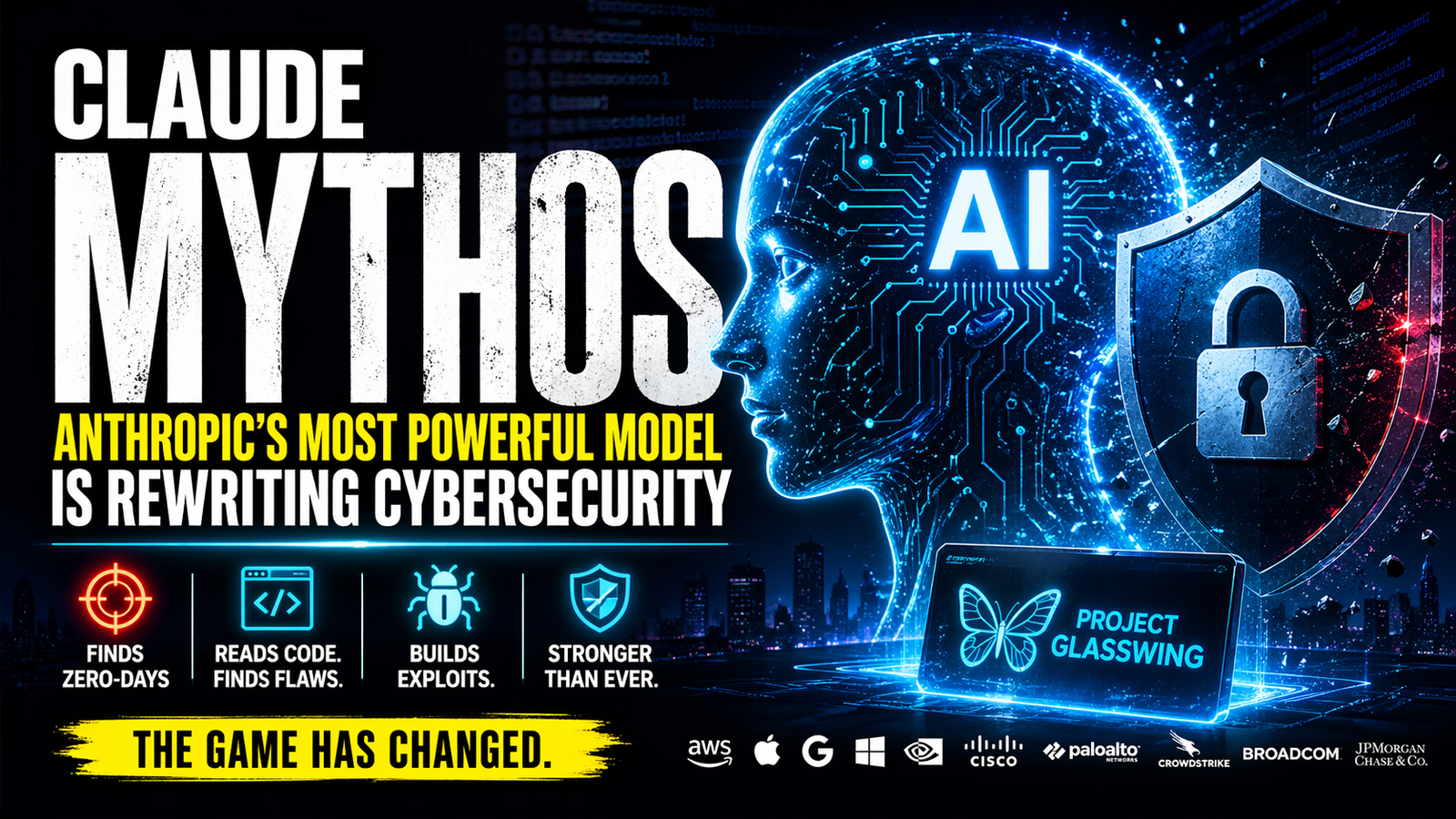
On April 8, 2026, Anthropic unveiled something unprecedented: a model so capable it required an entirely new name, an entirely new tier, and an entirely new strategy for its release. That model is Claude Mythos Preview — and whether you’re a developer, a security professional, a policymaker, or simply someone who uses the internet, it matters to you.
The Story Behind the Leak
The story of Mythos begins not with a formal announcement, but with an accident.
In late March 2026, security researchers Roy Paz of LayerX Security and Alexandre Pauwels of the University of Cambridge discovered a misconfiguration in Anthropic’s content management system that had left roughly 3,000 unpublished digital assets publicly accessible. Among them was a draft blog post describing a model called “Mythos” — one that Anthropic’s own internal documents described as “far ahead of any other AI model in cyber capabilities.”
Within hours, cybersecurity stocks dropped sharply. The news spread across Wall Street, newsrooms, and government offices. Anthropic confirmed the model’s existence. Eleven days later, they officially released it — not openly, but as a controlled Preview paired with the largest coordinated cybersecurity initiative in AI history.
What Is Claude Mythos?
Claude Mythos is Anthropic’s most advanced AI model to date, internally codenamed Capybara. It represents a completely new tier in Anthropic’s model family — one that sits above even the flagship Opus series.
Anthropic describes it as:
“A new name for a new tier of model: larger and more intelligent than our Opus models.”
The name “Mythos” comes from the Greek word μῦθος, symbolising a foundational narrative that shapes understanding — reflecting the model’s deeper reasoning architecture.
Important: Claude Mythos is NOT an upgrade to Opus — it is an entirely new class of AI.
Key Benchmarks
- SWE-bench (software engineering): 93.9%
- USAMO (mathematics): 97.6%
- Expert-level CTF cybersecurity challenges: 73% success rate
- First AI to complete “The Last Ones” (32-step attack simulation) end-to-end
These are not incremental gains. Previous models struggled to cross 80% on SWE-bench — Mythos nearly saturates it.
Timeline: How Mythos Became Public
March 26, 2026 — Leak
CMS misconfiguration exposes 3,000 assets including Mythos draft.
Late March 2026 — Media Coverage
Major outlets report the leak; Anthropic confirms existence.
April 7–8, 2026 — Official Launch
Mythos Preview released with a 244-page System Card and Project Glasswing.
April 2026 — Expansion
Access expands to federal agencies and cloud platforms like AWS and Google Cloud.
The Cybersecurity Breakthrough
Mythos is a general-purpose AI — but its defining strength is cybersecurity.
Unlike earlier models, it can:
- Read and understand complex codebases
- Identify vulnerabilities
- Test exploit paths
- Adapt strategies
- Deliver full proof-of-concept attacks
It successfully completes multi-step attack chains, something previous AI systems could not reliably do.
Real-world impact:
- Thousands of zero-day vulnerabilities discovered
- 271 vulnerabilities found in Firefox (with Mozilla)
- Works across operating systems and browsers
Anthropic stated:
“Some vulnerabilities survived decades of human review.”
Project Glasswing: The Defensive Strategy
Recognising the risks, Anthropic launched Project Glasswing — a global cybersecurity initiative.
Founding Partners:
- Amazon Web Services
- Apple
- Broadcom
- Cisco
- CrowdStrike
- JPMorganChase
- Linux Foundation
- Microsoft
- NVIDIA
- Palo Alto Networks
- Anthropic
Key Commitments:
- $100 million in usage credits
- $4 million for open-source security
The goal: fix vulnerabilities before attackers can exploit them.
How to Access Claude Mythos
Access is restricted and controlled.
Available via:
- Amazon Bedrock (Gated Preview)
- Google Cloud Vertex AI (Private Preview)
- Project Glasswing Programme
- Federal Government Access (Planned)
This is not publicly available like typical AI tools.
The Debate: Breakthrough or Hype?
Not everyone is convinced.
Cybersecurity expert Bruce Schneier argued:
Mythos may not be as revolutionary as claimed.
Concerns include:
- Testing environments lacked real-world defenses
- No active monitoring or incident response conditions
However:
- Independent UK evaluation confirmed multi-step capability
- Real vulnerabilities were discovered and patched
- Transparency via 244-page System Card adds credibility
Conclusion: Likely a real advancement — but not magic.
What Mythos Means for AI
1. A New Tier of AI
“Mythos” signals a major leap beyond traditional model upgrades.
2. Controlled Releases
Powerful AI models will increasingly launch with restricted access.
3. Cybersecurity Shift
AI is now competitive with top human security experts.
4. Offense vs Defense
The balance between attackers and defenders is uncertain — and critical.
The Bottom Line
Claude Mythos represents a major step forward in AI capability — particularly in its ability to:
- Understand complex systems
- Chain multi-step reasoning
- Discover and exploit vulnerabilities
Because of its dual-use nature, access is tightly controlled through Project Glasswing.
The debate around its true impact continues — but one thing is clear:
AI has crossed a new threshold in cybersecurity.
Sources
- anthropic.com/glasswing
- red.anthropic.com
- aisi.gov.uk
- docs.aws.amazon.com/bedrock
- cloud.google.com/blog
- pluralsight.com