
Artificial Intelligence is growing faster than ever — and Google has just reached a massive milestone.
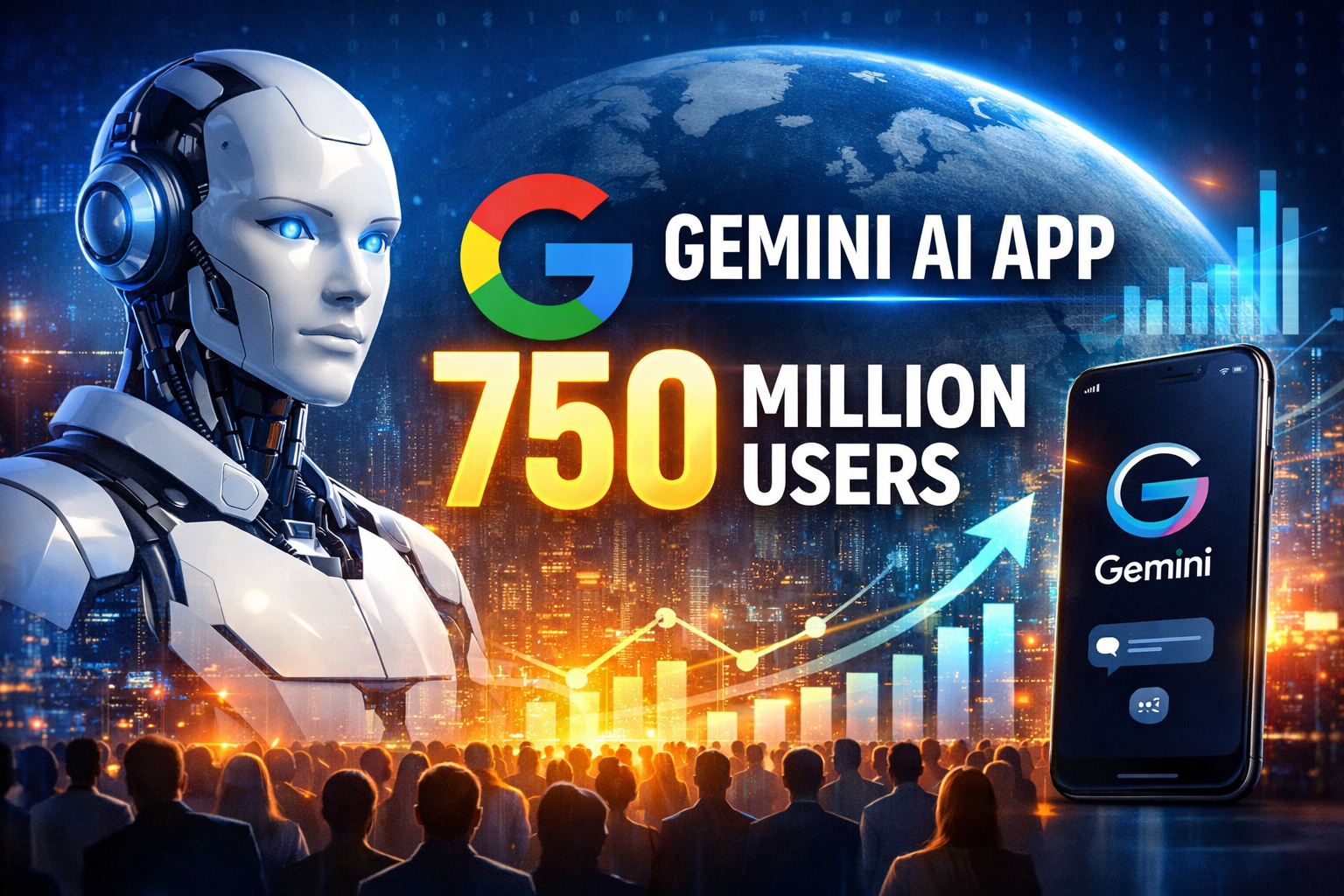
The Google Gemini AI app has officially crossed 750 million monthly active users, proving that AI tools are now part of everyday life for millions of people worldwide.
This achievement shows how quickly AI is becoming essential for students, developers, businesses, and content creators.
Gemini’s Explosive Growth Explained
Google’s Gemini has seen extraordinary growth in a short time. From early adoption to global dominance, the app is now one of the most used AI platforms in the world.
Key Highlights:
- Gemini has crossed 750 million monthly active users
- Millions of new users are joining every month
- AI usage is increasing across mobile, web, and enterprise platforms
- Gemini is now one of the fastest-growing AI apps globally
This rapid rise shows that AI is no longer just a tech trend — it is becoming a daily productivity tool for everyone.
Why Gemini Is Growing So Fast
Gemini’s popularity is not accidental. Several factors have contributed to its massive adoption.
1. Smart AI Features
Gemini helps users with:
- Writing content
- Coding assistance
- Research and study help
- Image and data analysis
- Business productivity
People are now using AI for everyday tasks like emails, assignments, and office work.
2. Deep Integration With Google Ecosystem
Gemini is integrated with many Google services, making it easy to use across devices:
- Android smartphones
- Chrome browser
- Gmail and Docs
- Search and cloud tools
This integration makes Gemini accessible to billions of users instantly.
3. AI for Everyone
Gemini is designed for:
- Students
- Developers
- Businesses
- Content creators
- Professionals
Its simple interface and powerful responses attract both beginners and advanced users.
Gemini vs Other AI Tools
The AI competition is becoming intense as multiple companies build advanced AI assistants.
Current AI Race:
- Google Gemini gaining massive users
- ChatGPT remains highly popular globally
- Many new AI tools entering market
- Businesses investing heavily in AI automation
This competition is pushing rapid innovation in artificial intelligence.
What This Means for Jobs and Businesses
The growth of AI platforms like Gemini is changing how people work.
For Businesses:
- Faster content creation
- Automated customer support
- Data analysis using AI
- Marketing and design automation
For Professionals:
- AI productivity tools increasing efficiency
- New job roles in AI field
- Demand for AI skills rising
- Automation changing traditional roles
Experts believe AI will not only replace some tasks but also create many new opportunities.
Impact of Gemini in India
India is one of the fastest-growing markets for AI adoption.
With millions of smartphone and internet users, AI tools like Gemini are becoming extremely popular.
In India, Gemini is used for:
- Education and homework help
- Coding and development
- Content writing
- Digital marketing
- Business automation
As internet access expands, AI usage in India is expected to grow rapidly in coming years.
Future of AI After This Milestone
Crossing 750 million users is just the beginning. The future of AI looks even more powerful.
Expected Trends:
- AI assistants in every smartphone
- AI in education and offices
- Voice-based AI interactions
- AI-powered search engines
- Smart automation in daily life
By 2030, AI could become as common as the internet itself.
Why This News Matters
This milestone proves one thing clearly —
Artificial Intelligence is now mainstream.
From students to CEOs, everyone is using AI tools to save time, increase productivity, and make smarter decisions.
The rapid growth of Gemini also shows how technology is shaping the future faster than ever before.
Final Thoughts
The rise of Gemini to 750 million users marks a turning point in the global AI revolution.
As competition increases and technology evolves, users can expect even more powerful AI tools in the coming years.
One question remains:
Are we entering a world where AI becomes our daily digital assistant for everything?
The answer may arrive sooner than we think.
Leave a Reply