
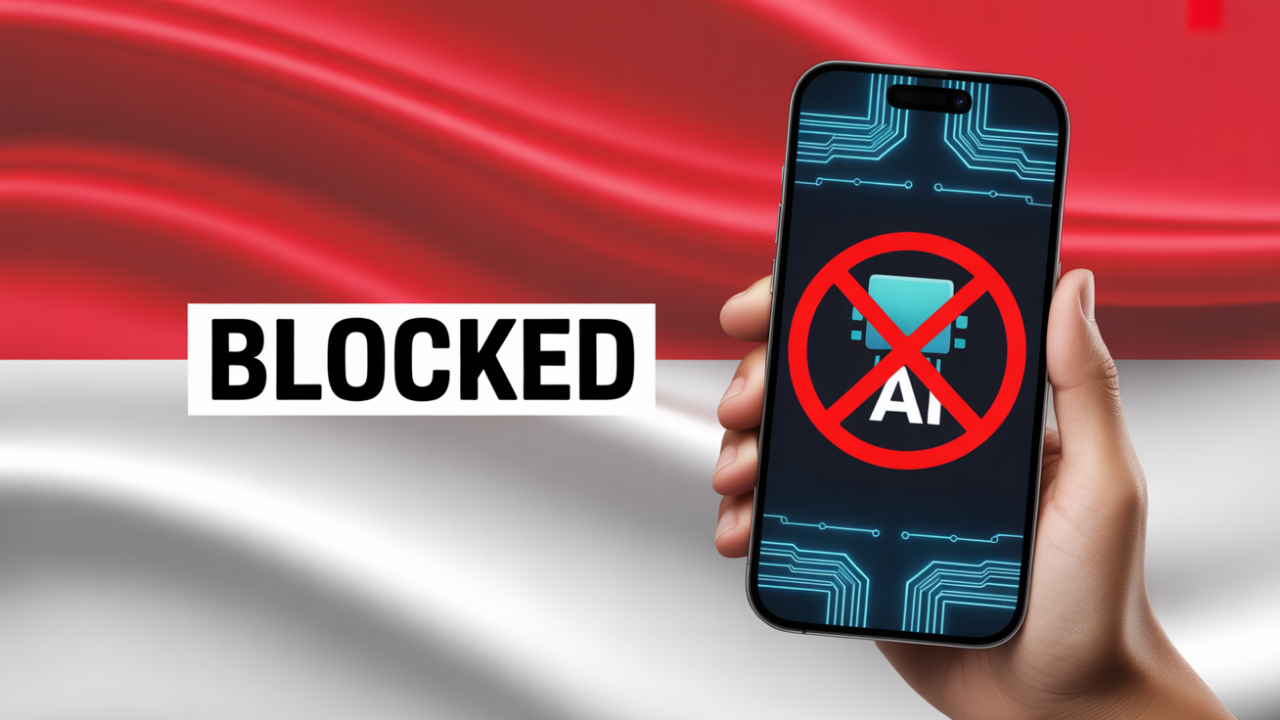
In a significant move that highlights growing global concerns about AI safety, Indonesia has officially blocked access to Grok, the artificial intelligence chatbot developed by xAI, Elon Musk’s AI company. The ban, implemented on January 10, 2026, comes in response to mounting concerns over the platform’s alleged role in enabling the creation of non-consensual sexualized deepfakes.
This decision places Indonesia among a growing number of countries taking proactive measures to regulate AI technology and protect citizens from potential digital harm.
What Led to the Ban?
The Indonesian government’s decision to block Grok wasn’t made in isolation. According to reports, the ban stems from specific concerns about the chatbot’s image generation capabilities being misused to create explicit, non-consensual deepfake content—particularly deepfakes of a sexualized nature.
Deepfakes are AI-generated synthetic media where a person’s likeness is digitally manipulated or fabricated, often without their knowledge or consent. When used maliciously, this technology can cause severe reputational damage, psychological harm, and violate personal dignity and privacy rights.
The Indonesian authorities determined that Grok’s systems lacked adequate safeguards to prevent such misuse, prompting swift regulatory action.
Understanding the Deepfake Threat
Non-consensual deepfakes have emerged as one of the most troubling applications of AI technology. While deepfake technology has legitimate uses in entertainment, education, and creative industries, its potential for abuse has raised serious ethical and legal questions worldwide.
Key concerns include:
- Privacy violations: Creating fake images or videos of individuals without consent
- Reputation damage: Spreading false, damaging content that appears authentic
- Gender-based violence: Disproportionately targeting women with sexualized deepfakes
- Digital harassment: Using AI-generated content as a tool for bullying or blackmail
- Erosion of trust: Making it harder to distinguish real content from fabricated material
Indonesia’s action reflects a growing recognition among policymakers that AI platforms must implement robust safety measures before deployment.
Indonesia’s Regulatory Approach
Indonesia has historically taken a firm stance on internet regulation and digital platform governance. The country operates under the Ministry of Communication and Information Technology, which has the authority to block websites and services that violate Indonesian laws or pose risks to public order and morality.
This isn’t the first time Indonesia has blocked major tech platforms. The country has previously restricted access to various services over regulatory compliance issues, content moderation concerns, and data protection requirements.
The Grok ban demonstrates Indonesia’s willingness to prioritize citizen safety over unfettered access to cutting-edge technology—a balance many nations are currently struggling to achieve.
What This Means for xAI and Grok
For xAI and its Grok chatbot, the Indonesian ban represents a significant challenge. As AI companies race to deploy increasingly powerful systems, this incident underscores the importance of building comprehensive safety features from the ground up.
xAI will likely need to:
- Implement stronger content moderation systems
- Enhance filters to prevent creation of non-consensual intimate imagery
- Demonstrate compliance with local regulations in markets where it operates
- Potentially engage in dialogue with Indonesian regulators to address concerns
The ban also serves as a warning to other AI companies: technological capability must be balanced with social responsibility.
The Broader Context: Global AI Regulation
Indonesia’s move is part of a larger global trend toward AI regulation. Countries and regions around the world are developing frameworks to govern AI deployment:
- The European Union has advanced comprehensive AI legislation through the AI Act
- The United Kingdom is developing sector-specific AI governance approaches
- The United States has issued executive orders on AI safety and is considering federal legislation
- China has implemented regulations on AI-generated content and deepfakes
- Australia and Canada are exploring regulatory frameworks for AI systems
The common thread across these initiatives is the recognition that AI technology, while transformative, requires guardrails to prevent harm and protect fundamental rights.
Protecting Against Deepfake Abuse
While regulatory action is important, addressing the deepfake threat requires a multi-pronged approach:
For individuals:
- Be cautious about sharing personal images online
- Use privacy settings on social media platforms
- Stay informed about your digital rights
- Report non-consensual intimate imagery to platforms and authorities
For platforms:
- Implement robust content detection systems
- Require verification before allowing image generation of people
- Provide clear reporting mechanisms for abuse
- Cooperate with legal authorities when violations occur
For governments:
- Develop clear legal frameworks criminalizing non-consensual deepfakes
- Invest in detection technology and digital literacy programs
- Foster international cooperation on AI governance
- Balance innovation with safety and rights protection
The Road Ahead
Indonesia’s decision to block Grok raises important questions about the future of AI governance. As AI systems become more powerful and accessible, the potential for both benefit and harm increases exponentially.
The challenge for the global community is developing governance approaches that:
- Protect fundamental human rights and dignity
- Allow for continued innovation and technological progress
- Adapt quickly to rapidly evolving capabilities
- Are enforceable across borders in our interconnected digital world
Indonesia’s action may prompt other nations to examine their own regulatory approaches to AI chatbots and image generation systems. It also signals to AI developers that safety cannot be an afterthought—it must be embedded in system design from the beginning.
Conclusion
The blocking of Grok in Indonesia represents a pivotal moment in the ongoing conversation about AI safety and governance. While some may view it as restrictive, others see it as a necessary step to protect citizens from emerging digital harms.
As AI technology continues to advance at breakneck speed, we can expect more countries to take similar regulatory actions when platforms fail to adequately address safety concerns. The incident serves as a reminder that technological progress must be accompanied by ethical considerations and robust protective measures.
For now, Indonesian users will not have access to Grok. Whether this ban becomes permanent or temporary will likely depend on whether xAI can address the government’s concerns and implement safeguards that meet Indonesian standards.
What’s certain is that this won’t be the last time we see a country take decisive action on AI safety—it’s likely just the beginning of a new era of AI accountability.
What are your thoughts on Indonesia’s decision? Should other countries follow suit, or are there better approaches to addressing AI safety concerns? Share your perspective in the comments below.
Last updated: January 11, 2026
Disclaimer: This blog post is for informational purposes only and does not constitute legal or technical advice. AI regulations vary by jurisdiction and continue to evolve.
Leave a Reply