
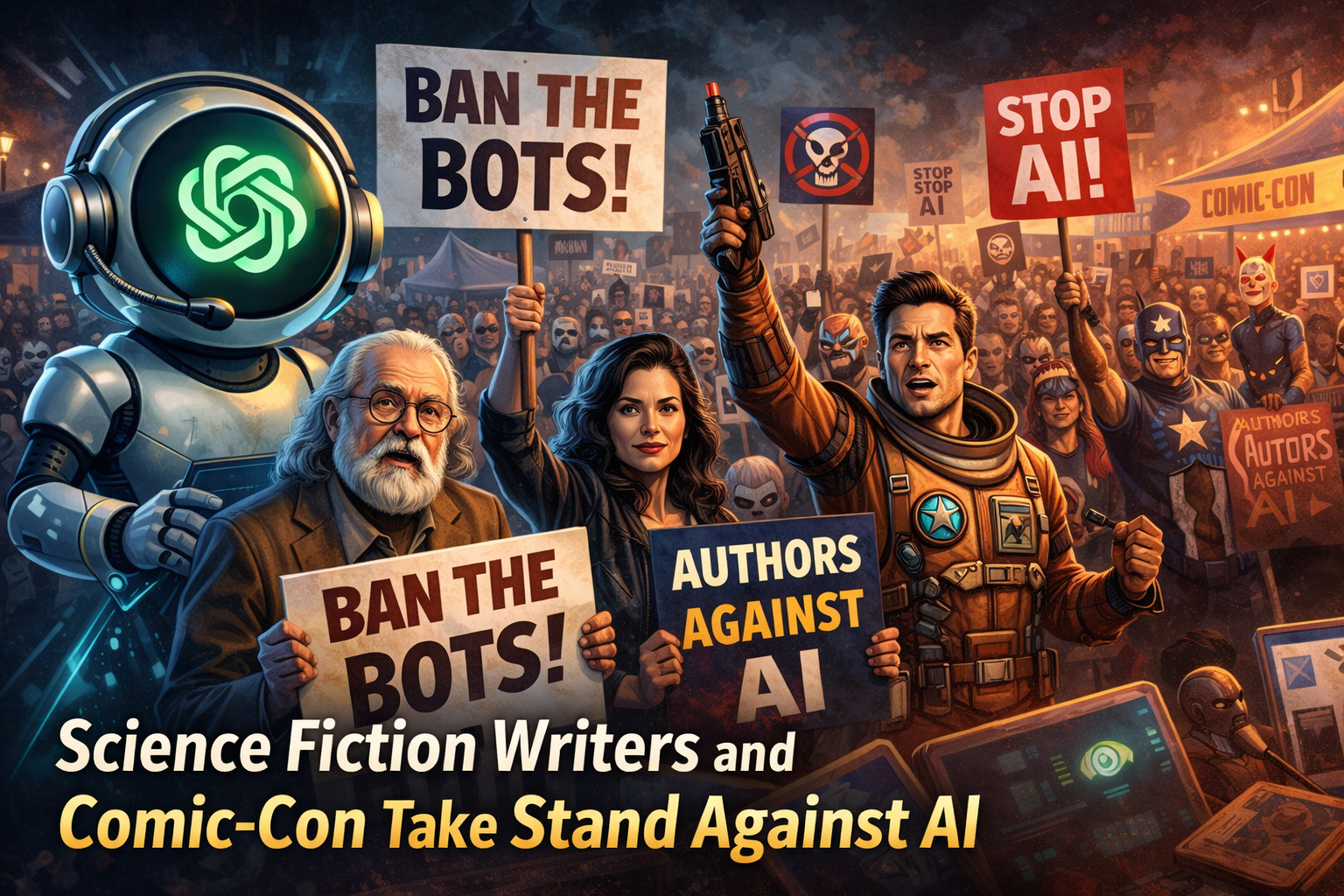
The creative community is drawing firm boundaries around artificial intelligence. In separate but coordinated moves, major institutions in science fiction and popular culture have instituted strict policies banning AI-generated content, signaling growing resistance to generative AI within creative fields.
The Nebula Awards Reversal
The Science Fiction and Fantasy Writers Association faced immediate controversy in December when it announced updated rules for the prestigious Nebula Awards. The initial policy stated that works entirely written by large language models would be ineligible, but authors who used these tools at any point during writing had to disclose their usage, leaving the decision to award voters.
The response from the writing community was swift and critical. Writers objected to what they saw as opening a door for AI-generated content in one of the genre’s most respected awards. Within days, SFWA’s Board of Directors issued a public apology, acknowledging their approach was wrong and apologizing for the distress caused to members.
The organization quickly revised its stance. The new rules now explicitly state that works written wholly or partially by generative AI tools are ineligible for Nebula Awards. Any work created with AI assistance at any point in the process faces immediate disqualification.
Comic-Con Quietly Changes Course
San Diego Comic-Con encountered similar pushback this month when artists discovered rules permitting AI-generated artwork to be displayed at the convention’s art show, though not sold. The creative community’s reaction prompted swift action.
The convention quietly updated its policy to read that material created by artificial intelligence, either partially or wholly, is not allowed in the art show. While the organization’s apology was less public than SFWA’s, art show coordinator Glen Wooten reportedly explained in emails to artists that previous rules had been in place for several years as a deterrent, but stronger language became necessary as the issue grew more pressing.
Wooten’s message was clear and unambiguous: AI-generated content receives a straightforward rejection.
The Broader Pattern
These decisions reflect a wider trend across creative industries. Music distribution platform Bandcamp recently implemented its own ban on generative AI, joining this growing movement of platforms and organizations rejecting AI-created content.
The Complexity Ahead
While opposition to AI in creative work appears strong, observer Jason Sanford, who reported extensively on the SFWA changes, raised important questions about implementation. As AI technology becomes embedded in everyday software tools, defining what constitutes AI assistance grows increasingly complex.
Sanford noted that many word processing programs, search engines, and research tools now incorporate AI components. He expressed concern that writers using standard software with embedded AI features shouldn’t face unfair disqualification or criticism, emphasizing the need for careful policy definitions as corporations integrate these technologies into common tools.
Despite these complexities, Sanford stated he refuses to use generative AI in his fiction writing, citing concerns about both the technology’s creative limitations and what he views as theft from human creators. He argued that these tools fundamentally defeat the purpose of storytelling.
Why Creative Communities Resist
The creative sector’s resistance to AI stems from several concerns. Many view generative AI training as unauthorized use of copyrighted creative work. Others argue that AI-generated content lacks genuine creativity and artistic vision. There’s also widespread concern about AI displacing human creators from their livelihoods.
For organizations like SFWA and events like Comic-Con, these policies serve as statements defending human creativity and authorship. They represent institutional recognition that creative work holds value beyond mere output—that the human process of creation matters.
What Comes Next
More organizations will likely announce similar positions throughout the year. As AI capabilities expand and integration deepens, creative communities face ongoing debates about where to draw boundaries.
The tension between technological advancement and creative integrity shows no signs of resolving quickly. For now, major institutions in science fiction and popular culture have made their stance clear: in their spaces, human creativity remains non-negotiable.
Leave a Reply