
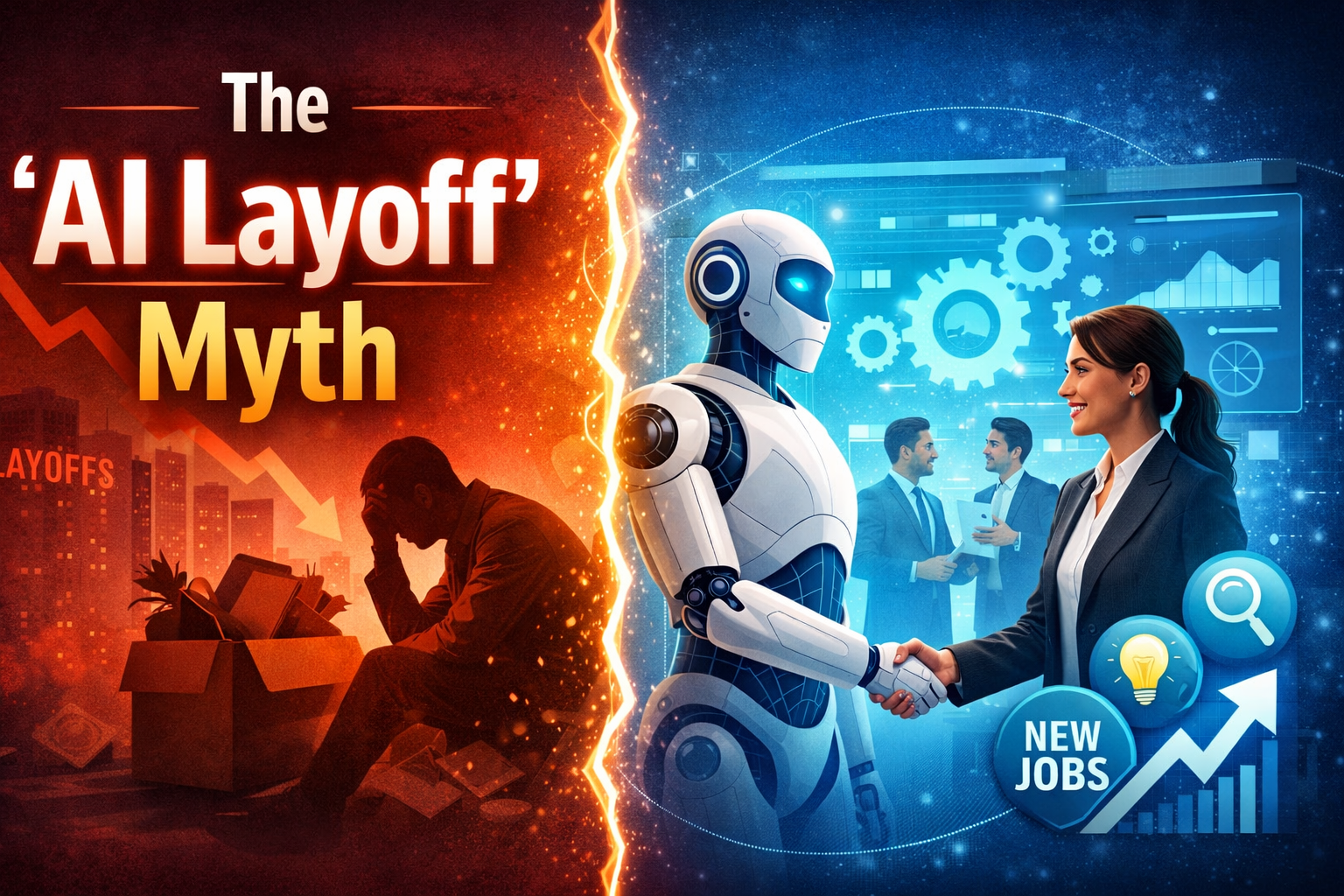
Understanding the AI Layoff Myth
The belief that artificial intelligence (AI) is a primary cause of mass job layoffs is a prevalent misconception that merits thorough examination. While it is undeniable that automation and AI technologies have transformed various industries, attributing job losses solely to AI overlooks the complexity of labor markets and the multifaceted reasons behind employment changes.
Historically, AI has evolved as a tool designed to enhance productivity and efficiency rather than to replace human workers. The initial development of AI technologies aimed to assist humans in repetitive, mundane tasks, thereby allowing workers to focus on more strategic activities requiring creativity and emotional intelligence. This distinction is critical when analyzing the relationship between AI and job layoffs.
Case studies further illustrate this point. For example, in the manufacturing sector, the introduction of robotics has led to increased production capabilities and, in some cases, the creation of new job opportunities. Companies that embraced AI-driven solutions often saw a surge in demand for skilled labor to interpret and manage these advanced technologies. Such trends contradict the notion that AI indiscriminately eliminates jobs; rather, they suggest a shift in the type of skills that are in demand.
Moreover, statistics from recent research show that while certain roles may become obsolete due to AI advancements, new positions emerge simultaneously, particularly in tech-driven fields such as data analysis and system management. These findings reinforce the idea that AI should be viewed as a facilitator of innovation and growth rather than a direct catalyst for job loss.
By acknowledging the historical context and the intended purpose of artificial intelligence, it becomes evident that simplified narratives surrounding AI and layoffs do not capture the nuanced dynamics of employment in a rapidly changing technological landscape.
Real Reasons Behind Job Layoffs
Job layoffs have become a widespread concern, leading to prevalent misconceptions surrounding their causes. Many discussions tend to center around the advent of artificial intelligence (AI) and its potential to automate jobs. However, it is essential to recognize that the real reasons for job layoffs stem from multifaceted economic and business-related factors.
One of the primary contributors to layoffs is economic downturns or recessions. These periods of financial decline force companies to reevaluate their operational expenditures, often resulting in difficult decisions regarding workforce reduction. During such times, businesses experience decreased demand for their products or services, prompting them to downsize in order to maintain profitability.
Mismanagement also plays a significant role in the decision to lay off employees. Inefficient leadership, poor financial oversight, or strategic blunders can lead to an organization’s weakened position in the market. Companies that fail to adapt to changing consumer preferences or competitive pressures may find themselves compelled to reduce their workforce as a corrective measure.
Furthermore, strategic restructuring initiatives are a common reason for layoffs. Organizations often undertake restructuring to align their workforce with long-term business goals, incorporate new technologies, or pivot to more profitable business models. During such transitions, certain positions may become redundant, leading to job eliminations.
Finally, outdated skill sets can hinder employee retention, contributing to layoff scenarios. In fast-evolving industries, companies require a workforce that is adaptable and well-versed in current technologies and practices. When employees cannot meet these evolving demands, it places their positions at risk, irrespective of any advances in AI technology.
The Role of AI in Workforce Transformation
Artificial Intelligence (AI) is rapidly reshaping the workforce in ways that many have yet to fully comprehend. One of the key benefits of AI integration is its ability to automate repetitive tasks, which historically consumed vast amounts of time and resources. By handling mundane activities, AI enables employees to focus on more strategic and creative work, thereby enhancing productivity and job satisfaction.
For instance, industries such as manufacturing and logistics have successfully utilized AI systems to streamline their operations. By automating inventory management or optimizing supply chain logistics, companies can reduce operational costs while allowing their workforce to concentrate on innovative problem-solving and higher-level decision-making tasks. This shift not only improves operational efficiency but also fosters a more engaged and skilled workforce.
Moreover, the emergence of AI technology has led to the creation of new job roles that did not exist a decade ago. Positions such as AI trainers, data analysts, and automation specialists are becoming increasingly vital in modern organizations. These roles demand a different skill set, often requiring expertise in both technical and interpersonal communication skills. The growth of these new positions signals a significant transformation in workforce needs and underscores the importance of ongoing education and training for current and future employees.
Additionally, the collaborative potential between humans and machines is a cornerstone of this workforce evolution. By utilizing AI as a complementary tool rather than a replacement, organizations can enhance their product offerings while nurturing human talent. The integration of AI solutions encourages a partnership where human creativity and machine efficiency converge, leading to enhanced innovation and competitive advantage.
Adapting to the Future: Reskilling and Thriving with AI
As artificial intelligence continues to reshape the workforce landscape, it is imperative for both professionals and organizations to adapt effectively to this evolving environment. The key to thriving in an AI-enhanced workplace lies in reskilling and embracing a culture of continuous learning. Professionals must proactively seek opportunities that enable them to acquire new skills relevant to the AI domain. This not only enhances their employability but also equips them to leverage AI technologies in their roles.
Organizations play a crucial role in this adaptation process. By investing in reskilling initiatives, businesses can ensure that their employees are well-prepared to navigate the challenges and opportunities presented by AI advancements. Implementing training programs that focus on critical thinking, data analysis, and other competencies can empower employees to work alongside AI rather than compete against it. Such initiatives not only bolster workforce capabilities but also foster a sense of loyalty and commitment among employees.
Moreover, fostering a culture of innovation is essential in adapting to technological change. Organizations should encourage creative problem-solving and experimentation, allowing employees to explore new ideas and approaches. This can be achieved by providing platforms for collaboration and facilitating knowledge sharing, which can ultimately lead to innovative solutions that benefit the organization.
Resilience will also be a vital characteristic for professionals in the face of rapid technological change. Embracing a growth mindset, where individuals view challenges as opportunities for learning, can significantly contribute to their ability to adapt. By staying informed about industry trends and continuously seeking personal development, workers can remain relevant in a landscape increasingly influenced by AI. Ultimately, a concerted effort towards reskilling, innovation, and resilience can empower both individuals and organizations to thrive in an AI-driven future.
Leave a Reply