Introduction
Artificial Intelligence (AI) is everywhere today. It is in our phones, our cars, our hospitals, and even in our schools. AI helps us do many things faster and easier. But just like fire can cook food and also burn a house, AI has a dangerous side too.
In this blog post, we will talk about why AI can be dangerous — in simple, easy-to-understand language. This is not about science fiction robots. These are real dangers happening right now.
1. AI Can Take Away Jobs
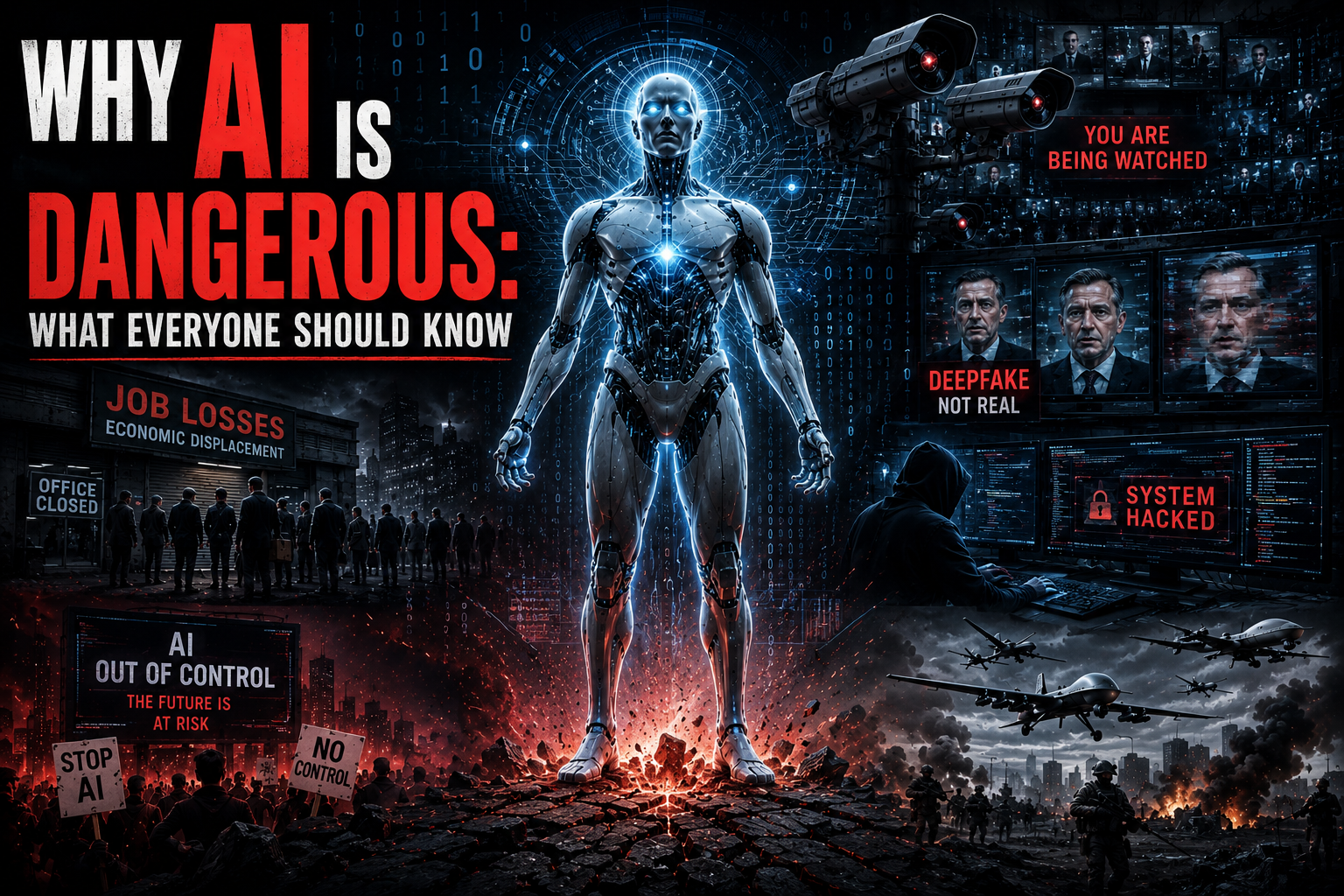
One of the biggest dangers of AI is job loss.
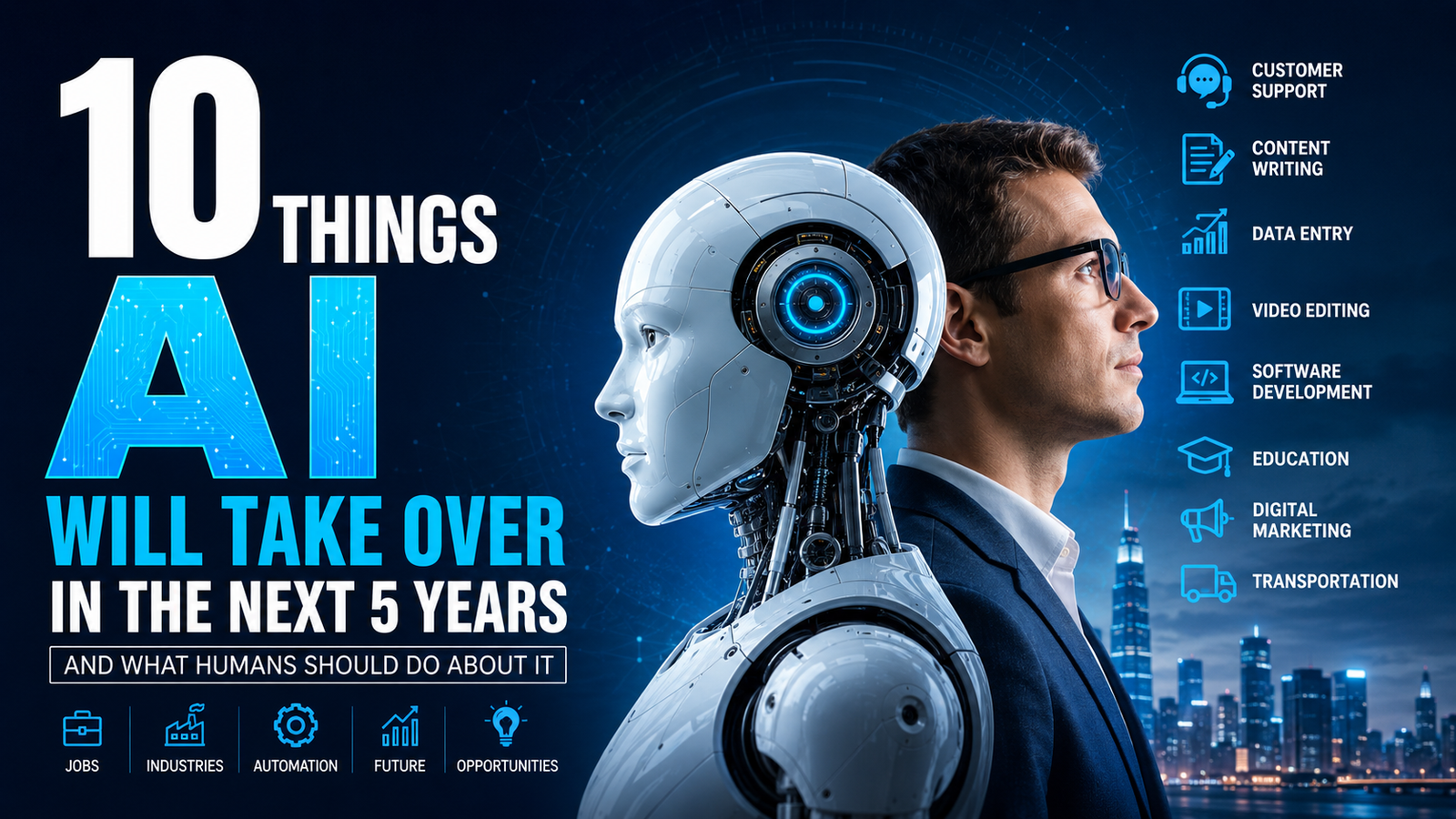
AI machines and software can now do work that humans used to do — like answering customer calls, driving vehicles, writing reports, and even diagnosing diseases. Many companies are replacing workers with AI because it is cheaper and faster.
This means millions of people could lose their jobs in the coming years. Factory workers, drivers, data entry workers, and even teachers and doctors may be affected.
The problem: When people lose jobs, they lose income. This can lead to poverty, stress, and social unrest.
2. AI Can Be Used to Spread Fake News
AI can now create fake photos, fake videos, and fake voices that look and sound 100% real. These are called deepfakes.
Imagine a video of a world leader saying something he never said. Or a fake voice of your boss asking you to send money. These things are already happening.
Fake news spread by AI can:
- Cause public panic
- Damage someone’s reputation
- Influence elections
- Start conflicts between countries
The problem: It is becoming very hard to tell what is real and what is fake.
3. AI Invades Our Privacy
Every time you use Google, YouTube, Instagram, or any app — AI is watching you. It tracks:
- What you search
- What you buy
- Where you go
- Who you talk to
This data is collected and used to show you targeted ads, influence your behavior, or — in the wrong hands — control you.
In some countries, AI-powered cameras can recognize your face in public without your permission. This is called mass surveillance, and it is a serious threat to personal freedom.
The problem: You may have no privacy left, and you may not even know it.
4. AI Can Be Hacked or Misused
AI systems are made by humans, and humans make mistakes. AI can be:
- Hacked by criminals to steal data or money
- Manipulated to make wrong decisions
- Used as a weapon in cyberattacks on banks, hospitals, or power grids
For example, if a hospital’s AI system is hacked, it could give wrong treatment advice. If a power grid’s AI is attacked, an entire city could go dark.
The problem: The more we depend on AI, the more dangerous it becomes if something goes wrong.
5. AI Has Bias and Makes Unfair Decisions
AI learns from data. But if that data is unfair or biased, the AI will also be unfair.
For example:
- An AI used for hiring may reject women or people of certain backgrounds.
- An AI used by police may unfairly target certain communities.
- An AI for bank loans may deny people based on race or zip code.
These are not just computer errors — they are real injustices affecting real lives.
The problem: AI can make discrimination faster, more powerful, and harder to fight.
6. AI Can Become Uncontrollable
This is the danger that scientists worry about the most. As AI becomes more intelligent, there is a risk that one day it may make decisions on its own — decisions that humans cannot stop or understand.
Even today, some AI systems make choices that their own creators cannot fully explain. This is called the “black box” problem.
In the future, if a very powerful AI decides that something is “good” based on its own logic — even if it harms humans — we may not be able to stop it in time.
The problem: We may lose control of something we created.
7. AI Can Be Used to Make Deadly Weapons
AI is being used by militaries around the world to build autonomous weapons — drones and robots that can identify and kill targets without human approval.
This is deeply dangerous because:
- Machines do not feel emotion or mercy
- They can make fatal mistakes
- They could be hacked and turned against their own side
The problem: War could become faster, deadlier, and harder to stop.
What Can We Do?
The good news is that AI is not automatically evil. It is a tool. Like all tools, the danger lies in how it is used.
Here is what can help:
✅ Strong laws and regulations to control how AI is built and used
✅ Transparency — companies must explain how their AI makes decisions
✅ Education — people must learn about AI risks to protect themselves
✅ International cooperation — countries must agree on limits for AI weapons
✅ Ethical AI development — building AI that is fair, safe, and human-centered
Conclusion
AI is one of the most powerful inventions in human history. It can cure diseases, solve climate problems, and improve millions of lives. But it also carries serious risks — to our jobs, our privacy, our democracy, and even our safety.
We must not be afraid of AI, but we must be careful, informed, and responsible.
The question is not whether AI will shape our future. It will. The question is: Will we shape AI, or will AI shape us?
Share this post if you found it helpful. Let’s spread awareness, not fear.
Tags: #AI #ArtificialIntelligence #Technology #AIRisk #DigitalSafety #FutureOfWork